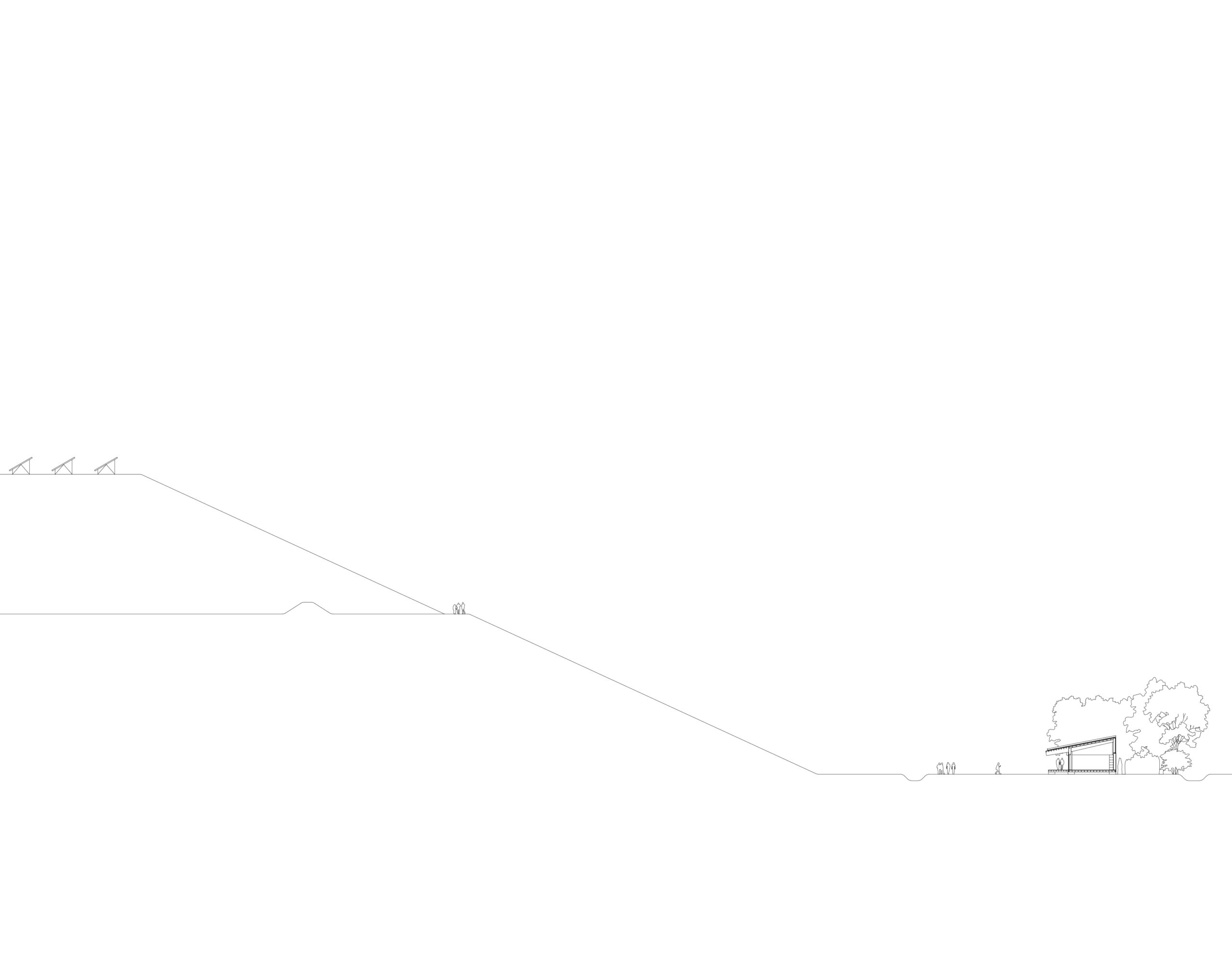
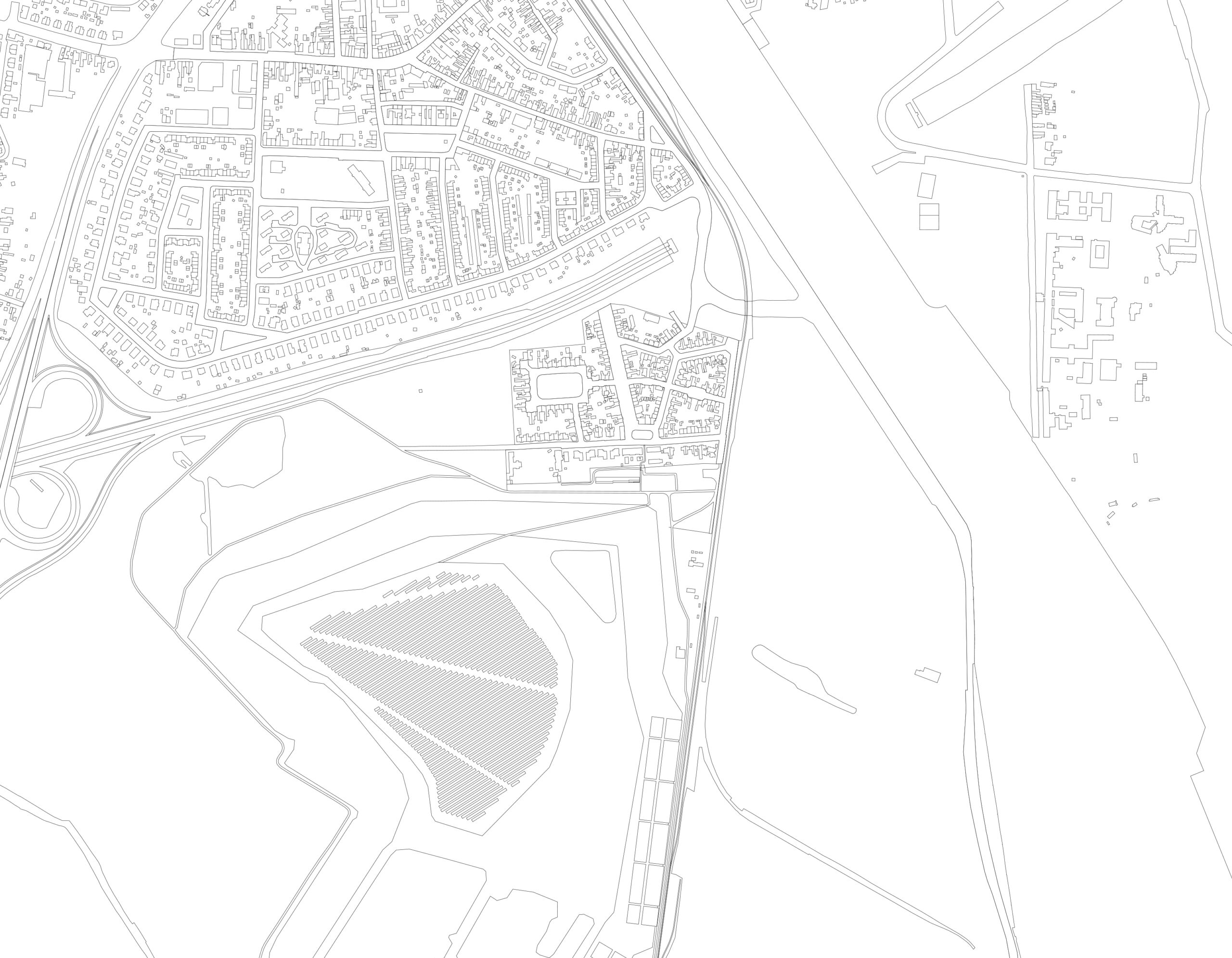
In a bend of the Ghent-Terneuzen Canal, opposite a steel giant, lies a mountain. This is the only point in the otherwise flat port landscape that offers a view of Ghent’s towers. The Solar Mountain, a remnant of a remediated brownfield, has now become one of the largest solar parks in the Benelux. Excess power, which cannot be fed back into the grid, is used there to produce hydrogen.
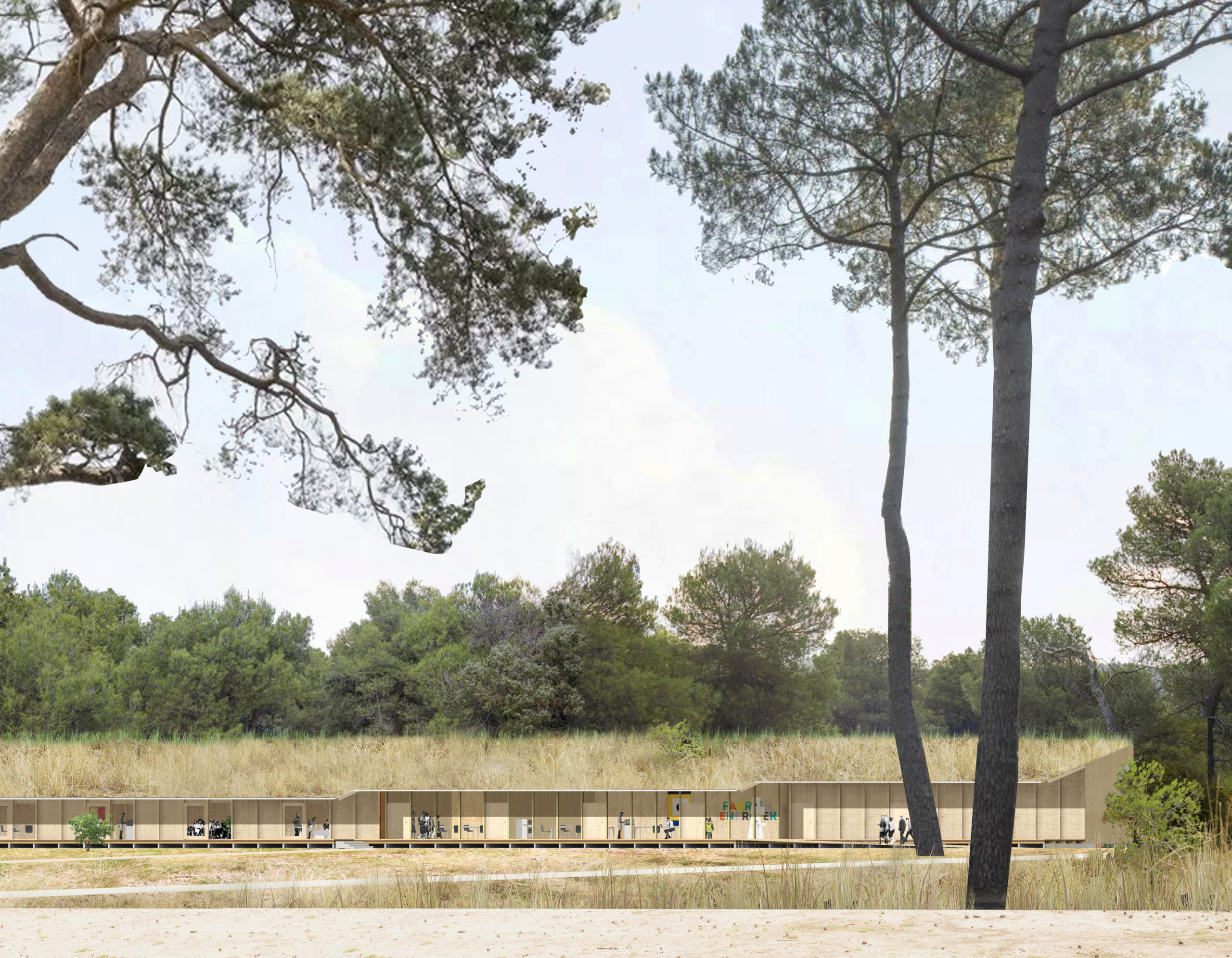
At the foot of the hill will be a nature education centre. This ambitious project, called Fabriek Energiek, aims to involve the general public in projects related to renewable energy in all its forms. It will also further expand and strengthen the existing educational programme for schools.
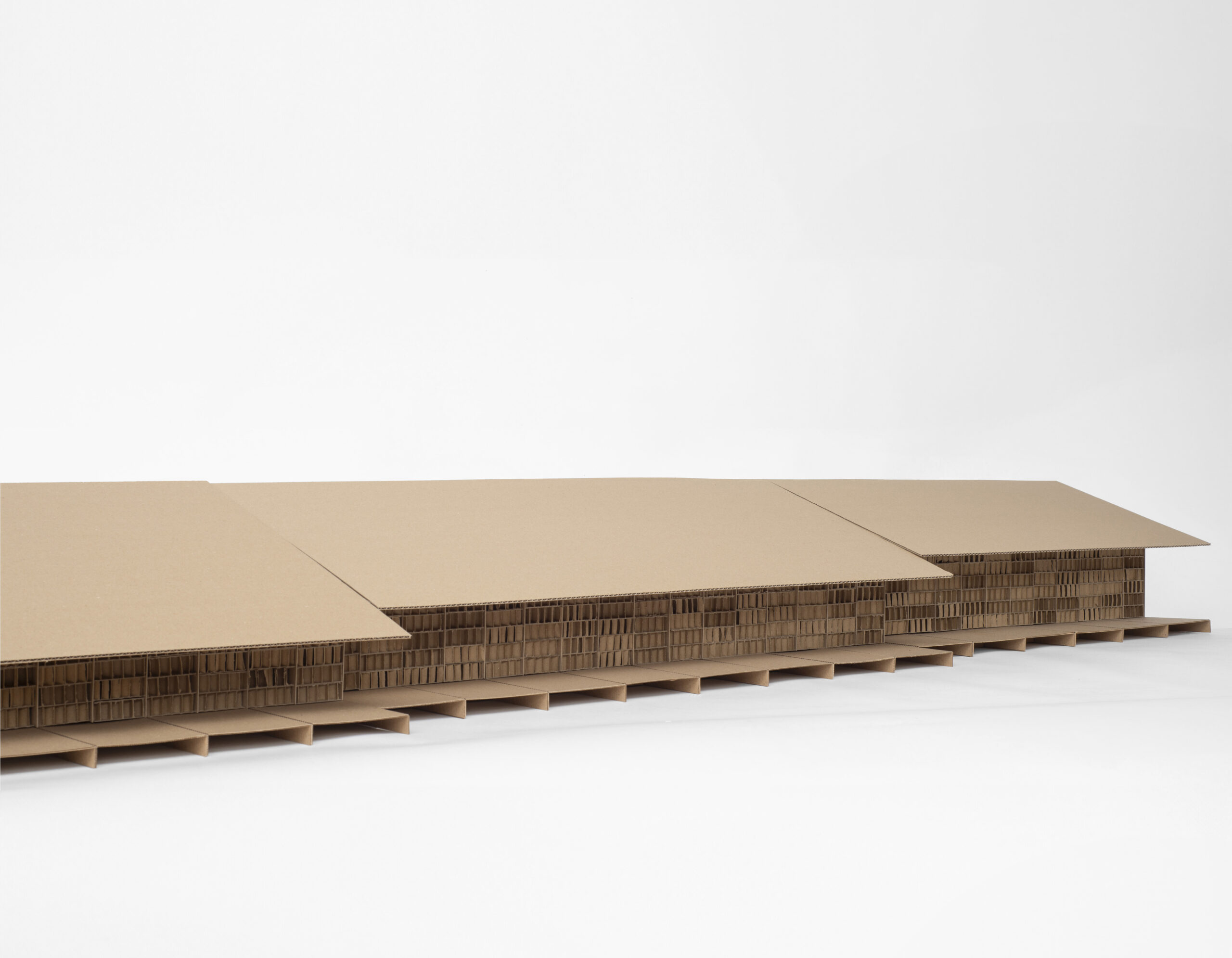
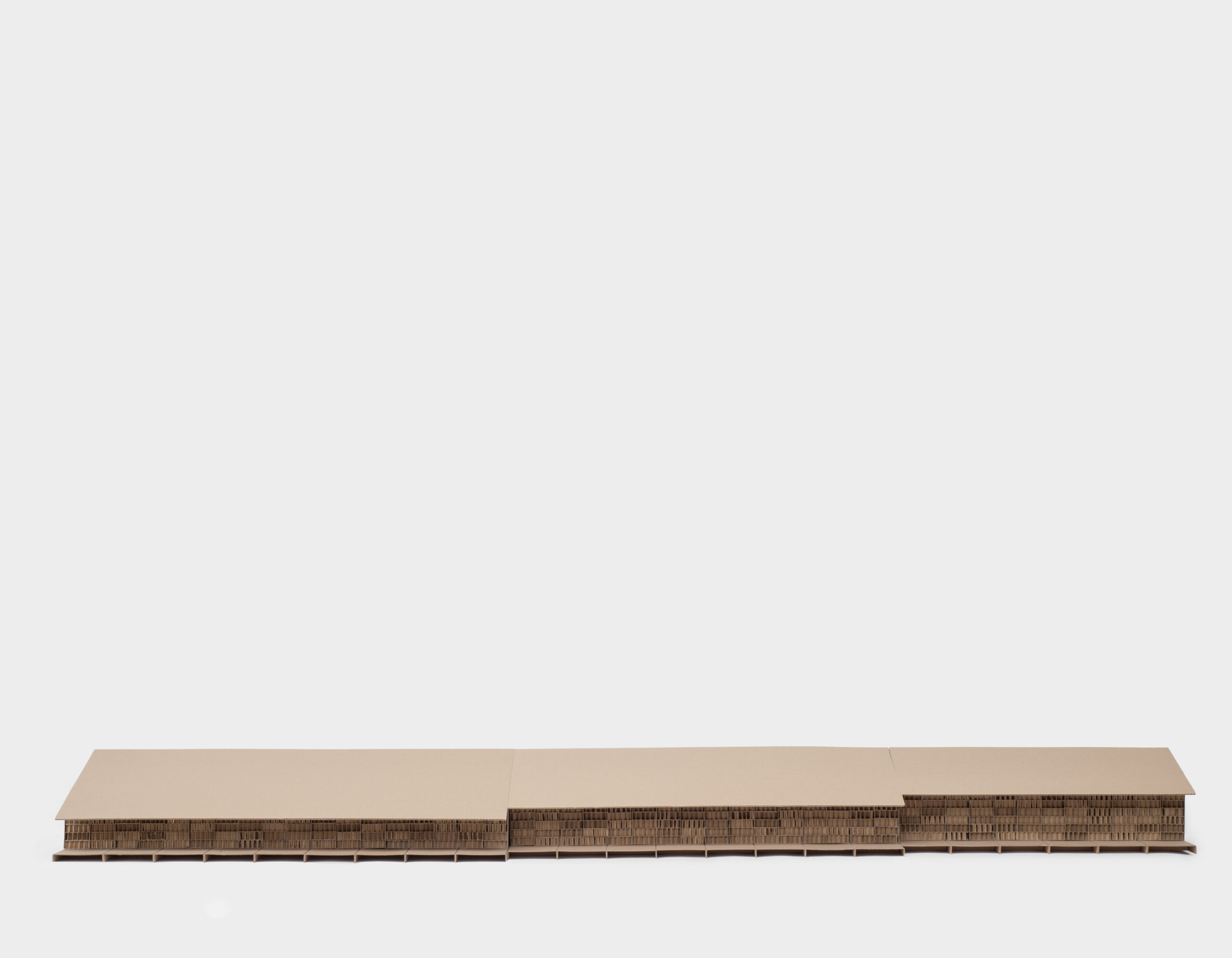
The design of the nature education centre, with its monumental sloping green roof, is a harmonious response to the hillside. The building consists of an elongated, rhythmic wooden structure, matched to the size of pressed straw cassettes. It stands on legs and has a loose prefabricated foundation, making it integrally demountable and reusable for the future. The wooden trusses that form the skeleton come from a recently demolished shed nearby.
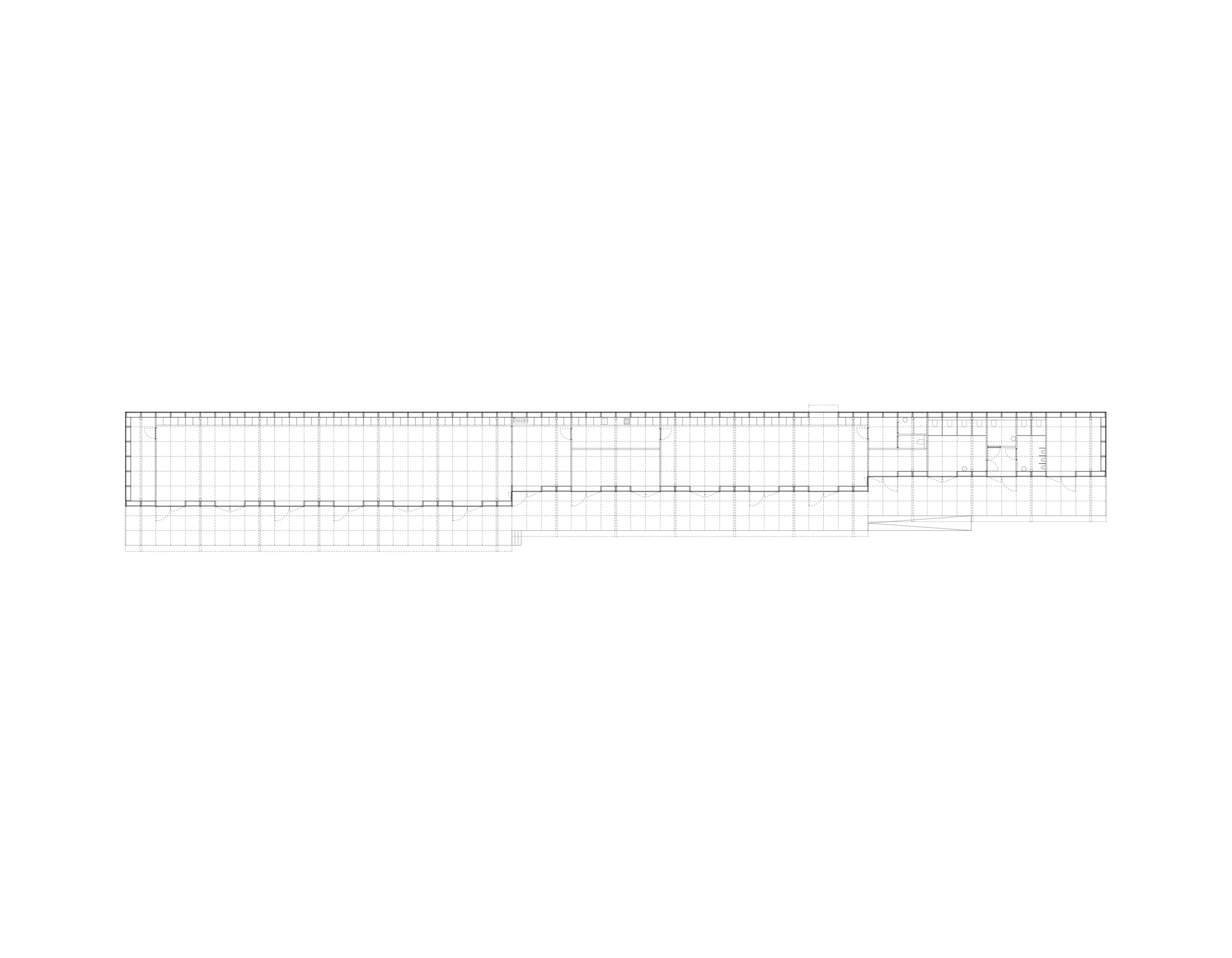
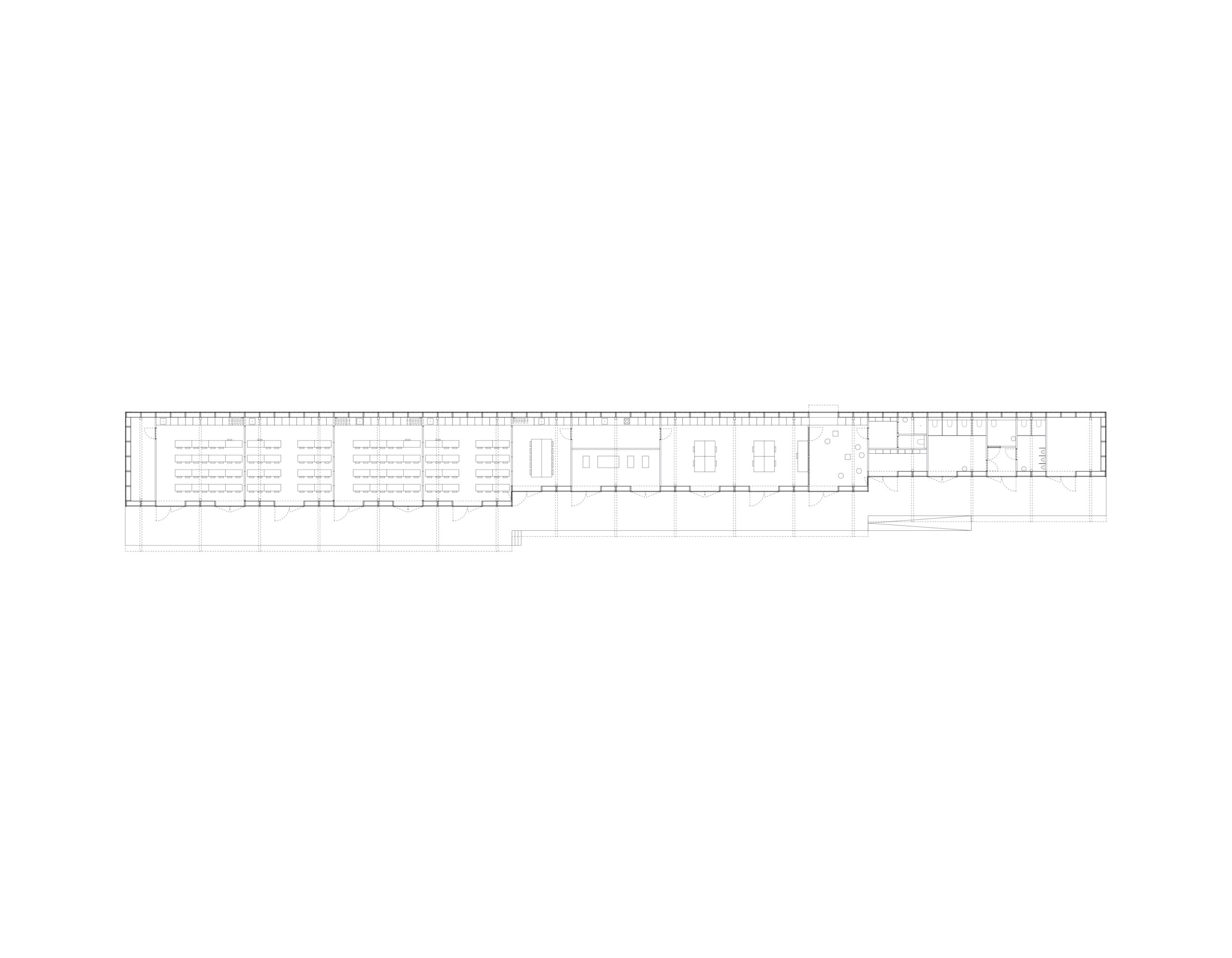
The three-stage form of the plan stems from the search for the ideal dimensions for the different programmes. Utility functions, office space and classrooms each have a building depth tailored to their specific use. Each function opens onto a platform protected by a generous canopy on the south side. On the scaled north side, the three-stage form is visible in the façade. Three different window heights, in relation to the depth of the building, bring in northern light along the ceilings that follow the roof slope.
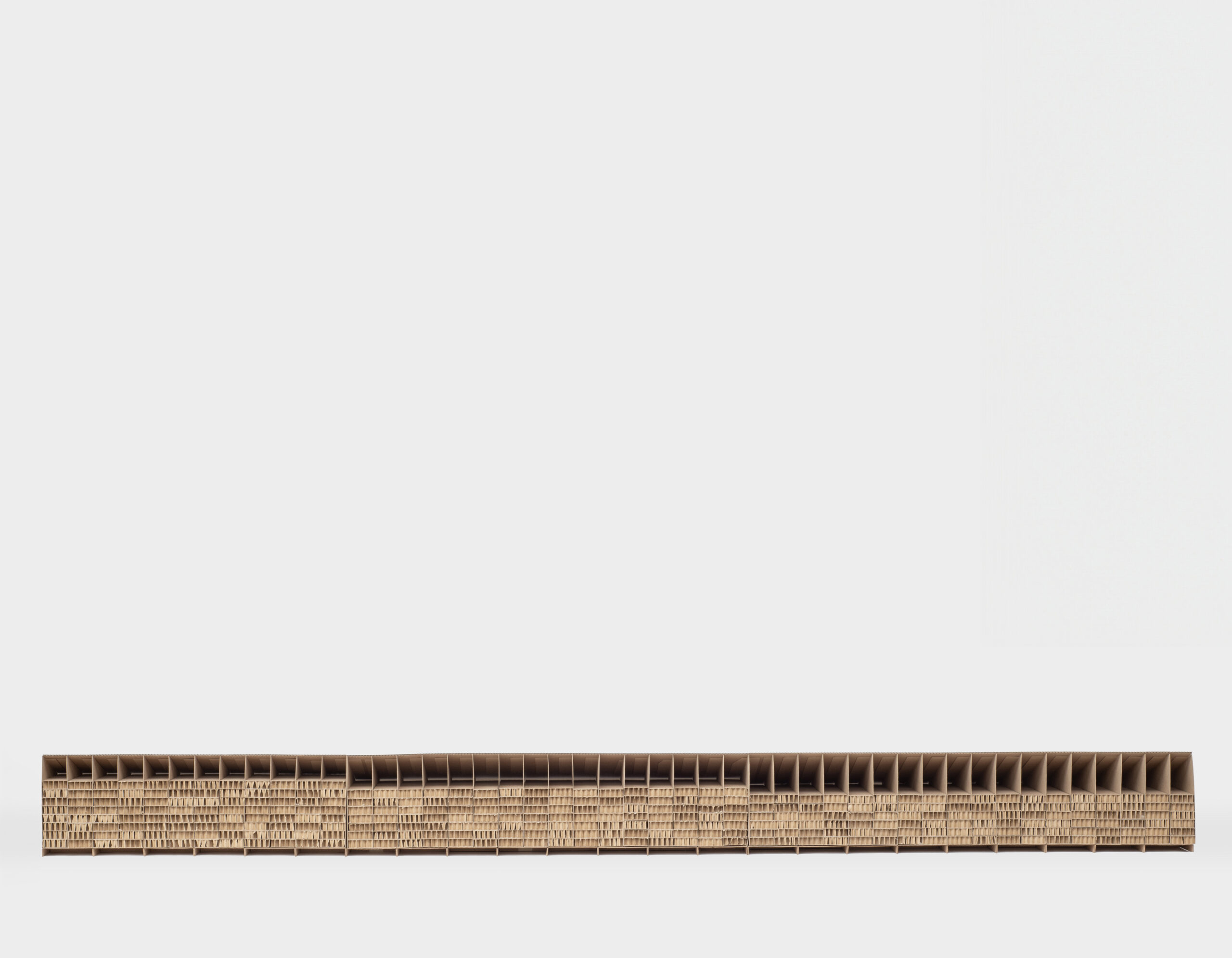
The building itself is educational and shows what it is made of. The straw construction method shows behind ventilated glass panels at the level of the central nave. The uniform façade rhythm of glass doors does not distinguish between functions and shows at the level of the storeroom which renewable technologies are used.
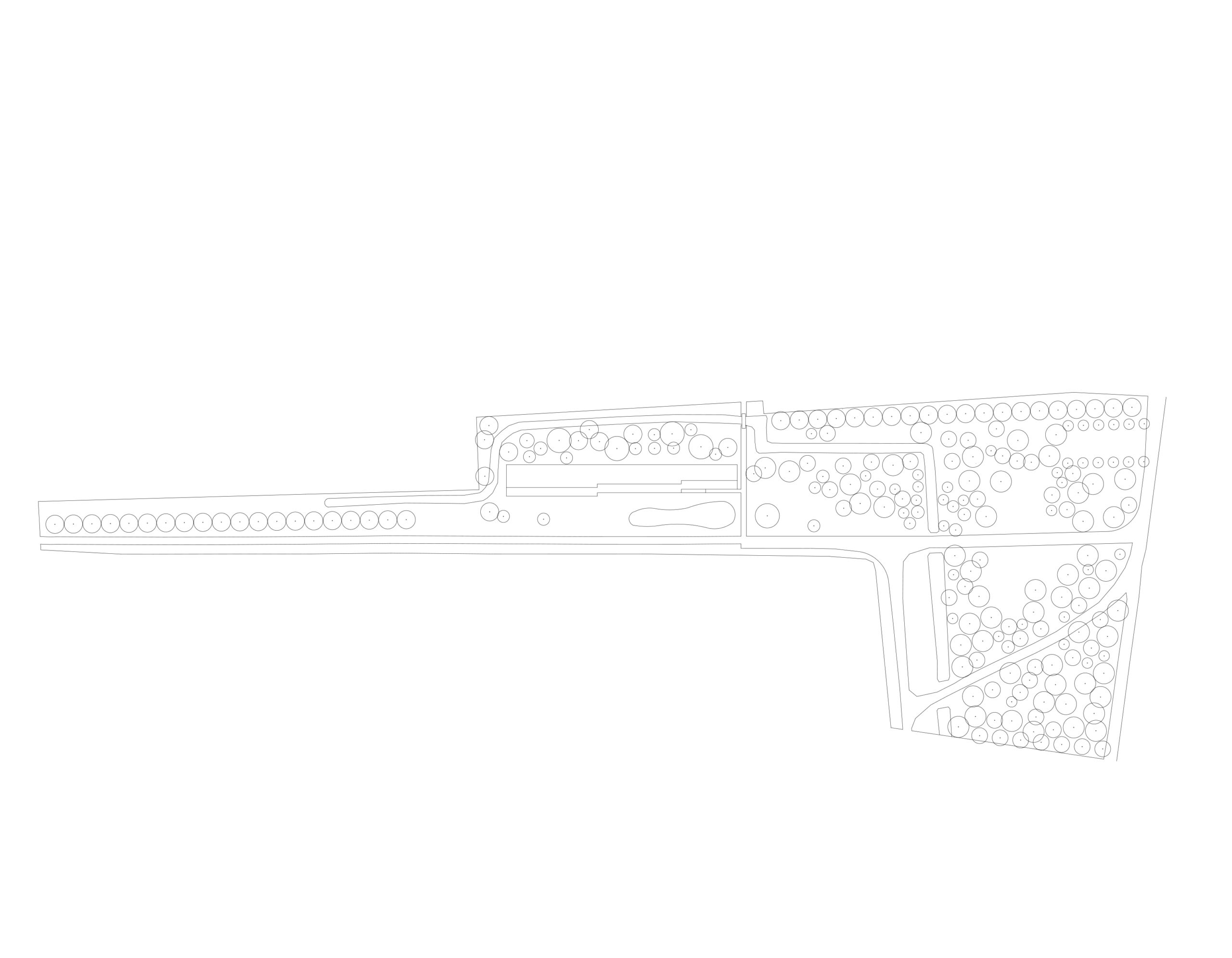
The neglected surrounding landscape is reforested and connects to the rugged nature of the Calemansputte. A new pedestrian bridge restores the connection to the adjacent social housing area.